.svg)
.svg)
.svg "RPA-Site-Header-Logo (1)")
.svg "logo (2)")


.svg)
.svg)
.svg)
.svg)
.svg)






.svg)
.svg)
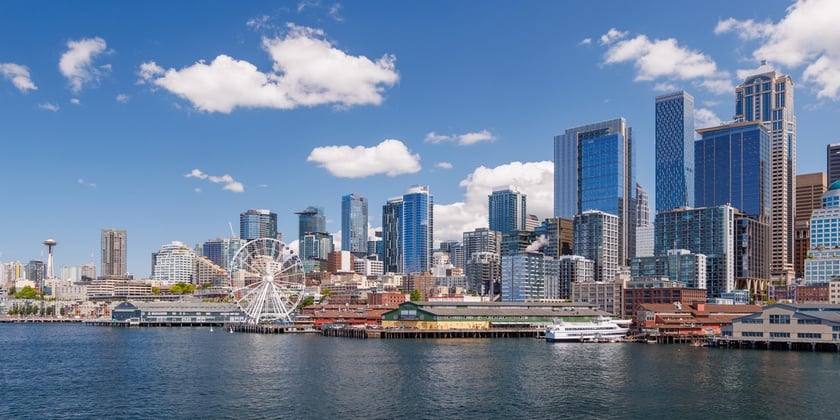
Seattle’s multifamily market continues to attract investors from across the Pacific Northwest and beyond. Strong job centers, steady population growth, and ongoing demand for rental housing have long supported the region’s apartment market.
At the same time, new development pipelines and evolving local regulations continue to shape how multifamily properties perform and operate. For investors, understanding these dynamics is essential to making informed decisions.
Here, we’ll explore some key elements shaping the Seattle multifamily market in 2026, including supply levels, rent trends, regulatory considerations, and the broader factors influencing long-term investment strategy.
Overview of the Seattle Multifamily Market
Seattle’s multifamily market is entering 2026 with steady fundamentals, even as the market adjusts following several years of significant development. Vacancy rates remain relatively stable, construction activity is slowing, and long-term demand drivers continue to support rental housing across the region.
Economic fundamentals remain an important driver of rental demand. According to Yardi Matrix, Seattle added 16,900 net new jobs over the past year, led by growth in education, health services, and hospitality. Even with overall employment growth slowing to 0.8% year-over-year, the region’s diverse economy continues to support population growth and renter demand.
Despite Seattle’s complex regulatory environment, multifamily investors continue to view the market as a long-term opportunity. Strong population trends, a diverse job base, and limited land availability help support demand for rental housing, keeping Seattle an attractive market for multifamily investors.
Rent Trends and Occupancy Rates
Seattle’s multifamily market has seen rent growth moderate as new supply has entered the market, but overall demand for rental housing remains strong. According to Kidder Mathews’ Q4 2025 report, Seattle’s multifamily vacancy rate held at 7.4% year-over-year, indicating that the market is continuing to absorb recently delivered units.
Rent levels remain elevated across much of the metro area. Relocity reported that the median rent across many popular Seattle neighborhoods is approximately $2,515 per month, reflecting ongoing demand in a region where high home prices continue to keep many residents in the rental market.
While rent growth has stabilized compared to the rapid increases seen earlier in the decade, demand varies by neighborhood. Areas close to employment centers, transit corridors, and walkable urban districts tend to maintain stronger occupancy and pricing power, while submarkets with higher concentrations of new development may experience slightly higher vacancy as additional units are absorbed.
For multifamily investors, rent trends and occupancy levels are key factors in a long-term investment strategy. Stable occupancy and sustained rental demand can help support predictable income, while periods of moderate rent growth often create opportunities for strategic acquisitions in markets with strong long-term fundamentals like Seattle.
New Multifamily Development and Supply Pipeline
Seattle’s multifamily development pipeline is beginning to moderate after several years of significant construction activity. According to Kidder Mathews’ Q4 2025 report, 17,089 units are currently under construction, representing a 23% decline from the previous year. Investment pricing has also adjusted slightly, with the average sales price per unit decreasing 4% to $294,557.
Recent supply has helped moderate rent growth as new apartments entered the market and vacancy levels normalized. While many projects are expected to deliver through 2026 and into 2027, absorption rates will play an important role in how quickly these units are filled and how pricing adjusts in the near term.
For investors, increases in supply do not necessarily indicate weakening demand. In many cases, new construction reflects strong population growth and continued demand from renters. When absorption remains steady, the market can accommodate additional inventory while maintaining overall stability.
As development activity begins to slow, many investors are now watching how a smaller construction pipeline could influence rent performance once the current wave of new projects is absorbed.
Regulatory Environment for Seattle Multifamily Owners
Seattle’s rental housing market operates within one of the most regulated environments in the country. For multifamily owners and investors, understanding local and state laws affecting Seattle rentals is essential to successfully operating rental housing in the area.
One recent policy development involves the use of rental pricing software. Under Washington State law, landlords may not use pricing software that aggregates data from unaffiliated third-party properties to generate rent recommendations.
Seattle also maintains specific rules governing tenant fees and notices. Under SMC 7.24.034, late rent fees are limited to $10 per month, and the ordinance prohibits landlords from charging additional fees for the preparation or delivery of landlord-issued notices.
In addition to fee limits, Seattle enforces detailed requirements related to rent increases, notice periods, and the Seattle eviction process. Landlords must follow strict timelines for rent change notifications, provide specific documentation when issuing notices, and comply with local tenant protection policies that extend beyond Washington State law.
These regulations can add operational complexity for property owners, particularly those managing multiple units or properties across different jurisdictions. Compliance often requires careful documentation, consistent procedures, and close attention to evolving Seattle landlord laws.
What This Means for Multifamily Investors
Seattle’s multifamily market continues to offer strong long-term investment potential, supported by steady population growth, a diverse job base, and consistent demand from renters. These fundamentals make the market attractive for investors pursuing long-term hold strategies.
There may also be opportunities to reposition existing properties, particularly as new developments enter the market. Strategic upgrades and operational improvements can help older properties remain competitive while improving overall asset performance.
Because the region’s regulatory environment is complex, expert property management in Seattle can play a critical role in maintaining compliance and efficient operations. For investors, understanding both market trends and operational strategy is key to maintaining stable performance in Seattle’s evolving rental market.
Final Thoughts: Seattle Multifamily Market Report 2026
Seattle remains a strong multifamily market supported by steady renter demand, a diverse employment base, and long-term population growth. While new supply and evolving regulations add complexity, the region’s underlying fundamentals continue to support multifamily investment.
For investors, success increasingly depends on understanding both market conditions and operational requirements. Monitoring development trends, rent performance, and regulatory changes can help position properties for long-term stability.
Download the Seattle Multifamily Investment Guide
Download the Seattle Multifamily Investment Guide for a deeper look at local market trends, investment strategies, and the key operational considerations that come with owning multifamily property in Seattle’s evolving rental market.



.jpg)